
Composite vs. PVC Decking: Which One Belongs on an Illinois Deck?
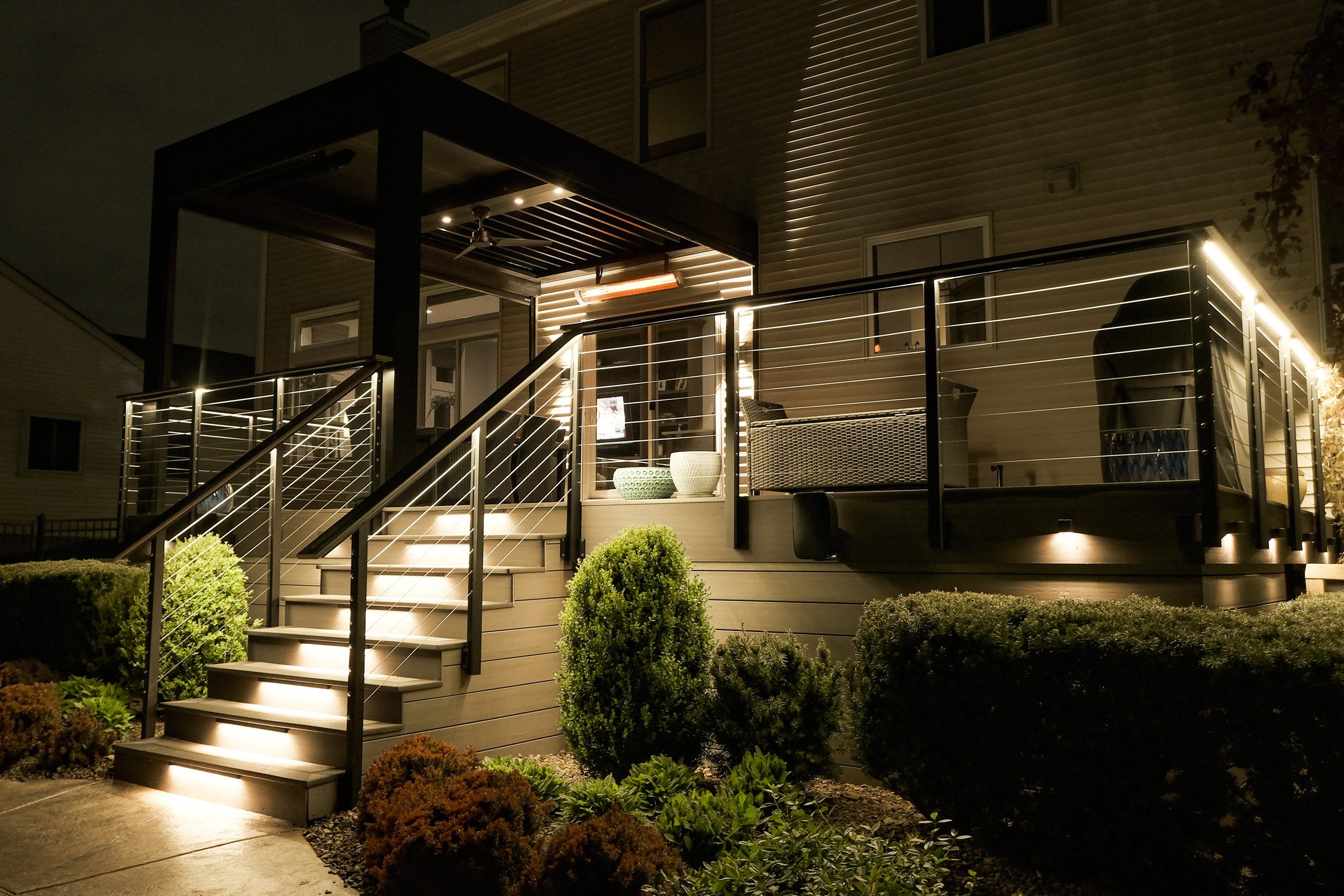
PVC decking has no wood fiber in it at all, so there’s nothing in the board for water to reach. Capped composite is wood fiber and polymer wrapped in a protective shell. In TimberTech’s own line, the PVC collections carry a lifetime product warranty and a 50-year fade and stain warranty, the four-sided composite collections carry 30 years and the three-sided ones 25. PVC costs more upfront and is the better pick where water sits: pool decks, second-story decks, shaded lots. For most decks we build in the western suburbs, a four-sided capped composite is the right answer. Here’s how to tell which one your deck needs.
What’s the difference between composite and PVC decking?
It comes down to what’s inside the board. TimberTech describes its PVC boards as polyvinyl chloride with no organic material in them. Its composite boards have a core of wood fibers and polymer, wrapped in a polymer cap on three or four sides.
That cap is what makes modern composite work. The core is protected from water and sun as long as the cap is intact, and on a four-sided board every face is capped, including the underside that sits over the joists. A three-sided board leaves the bottom face open, and TimberTech itself notes that uncapped composite can be prone to water and mold damage. That open underside is also the difference between a 30-year and a 25-year warranty.
We’re a TimberTech Authorized Dealer, so everything below compares TimberTech’s composite collections against its Advanced PVC collections (the boards sold under the AZEK name for years). Other brands publish their own figures, and we don’t speak for them.
How do they compare side by side?
These rows come from TimberTech’s own comparison page and its 2026 product guide. Where TimberTech doesn’t publish a figure, the row says so rather than filling the gap.
| Advanced PVC | Capped composite | |
|---|---|---|
| What’s in the board | PVC, no wood fiber | Wood fiber and polymer core, capped on 3 or 4 sides |
| Water resistance (TimberTech’s rating) | High | Moderate |
| Life span (TimberTech’s figure) | 50+ years | 25 to 30+ years |
| Product warranty | Limited lifetime, single-family residential | 30 years (4-sided), 25 years (3-sided) |
| Fade and stain warranty | 50 years | 30 years (4-sided), 25 years (3-sided) |
| Weight | Lighter than wood and composite | Heavier |
| Fire rating | Class A on Vintage and Landmark, Class B on Harvest | Class B on Legacy, Reserve and Terrain |
| Mold and mildew resistance | High | High |
| Upfront cost | Highest | Lower |
Sources: TimberTech, PVC vs. composite decking; TimberTech 2026 product guide; TimberTech Advanced PVC limited warranty, effective for purchases from October 1, 2023; TimberTech composite fade and stain limited warranty, dated October 1, 2023. Warranties cover single-family residential use.
Which one lasts longer in an Illinois winter?
Both are built for it, and both will outlast a wood surface by a wide margin. The difference shows up in the places where water doesn’t leave. Northern Illinois freezes and thaws many times a winter, and any material that takes on water and then freezes is under stress. PVC has nothing in it to take on water. A four-sided composite board doesn’t either, as long as the cap isn’t cut through or damaged.
So the practical question is where your deck stays wet. A deck under mature trees that holds leaves and shade, a pool surround that’s splashed all summer, a second-story deck that never fully dries out underneath: those are the places where PVC’s extra margin is worth paying for. A sunny, well-ventilated deck a couple of feet off the ground doesn’t need it, and a four-sided composite will do the job for its full warranty.
One thing a board can’t fix is the frame under it. A surface rated for 30 years or more on treated lumber is a finish outliving its own structure. That’s why we frame every deck on Fortress Evolution steel, and the reasoning is in our steel vs. wood framing guide. What goes wrong with frames in a northern Illinois winter is in our Illinois deck problems guide.
Does PVC decking get hotter than composite?
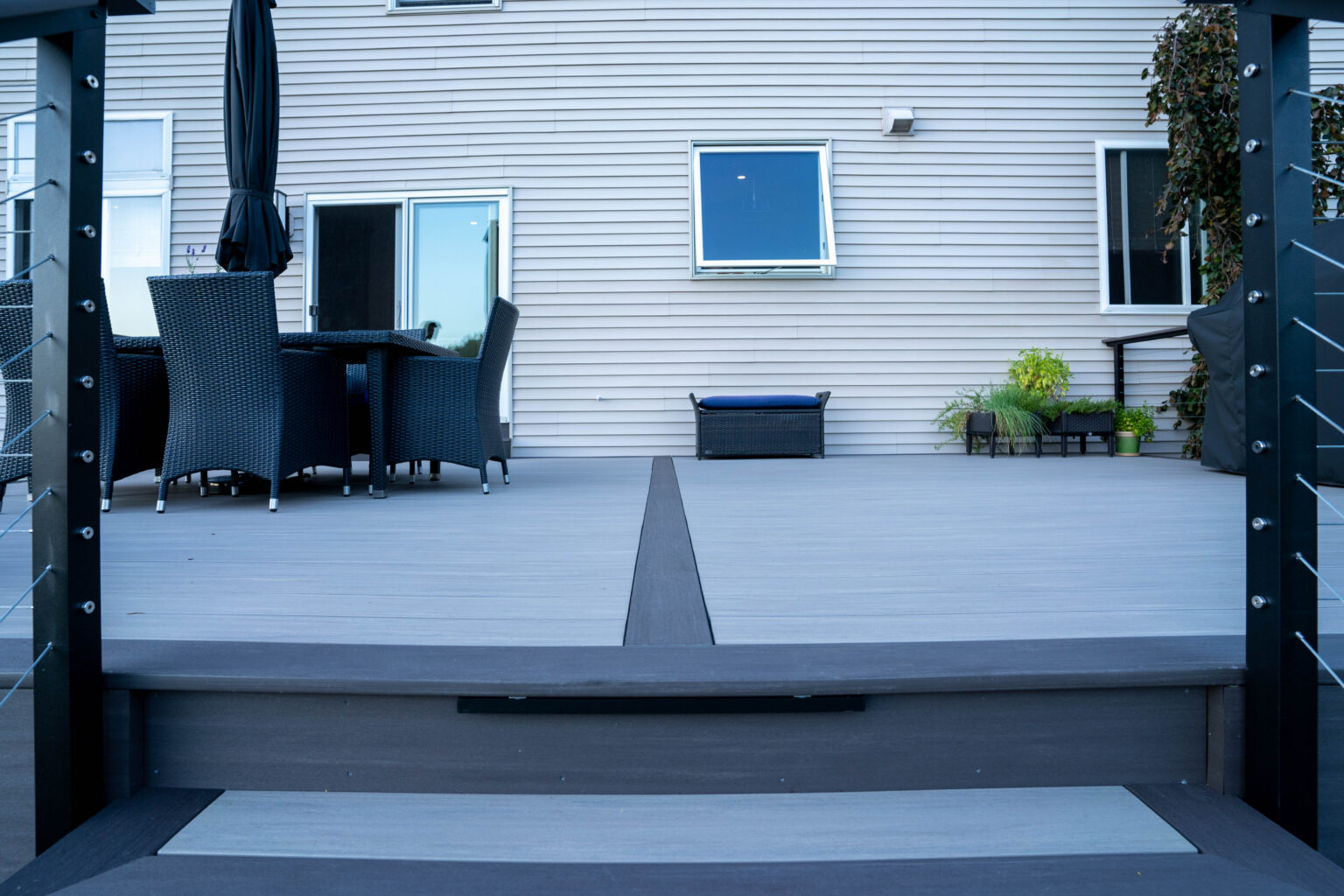
TimberTech is open about the reputation. Its comparison page says older, low-quality PVC earned a name for holding heat, and that its current PVC is made to avoid that. It doesn’t publish surface temperature figures for either material, so we can’t give you a number and won’t invent one.
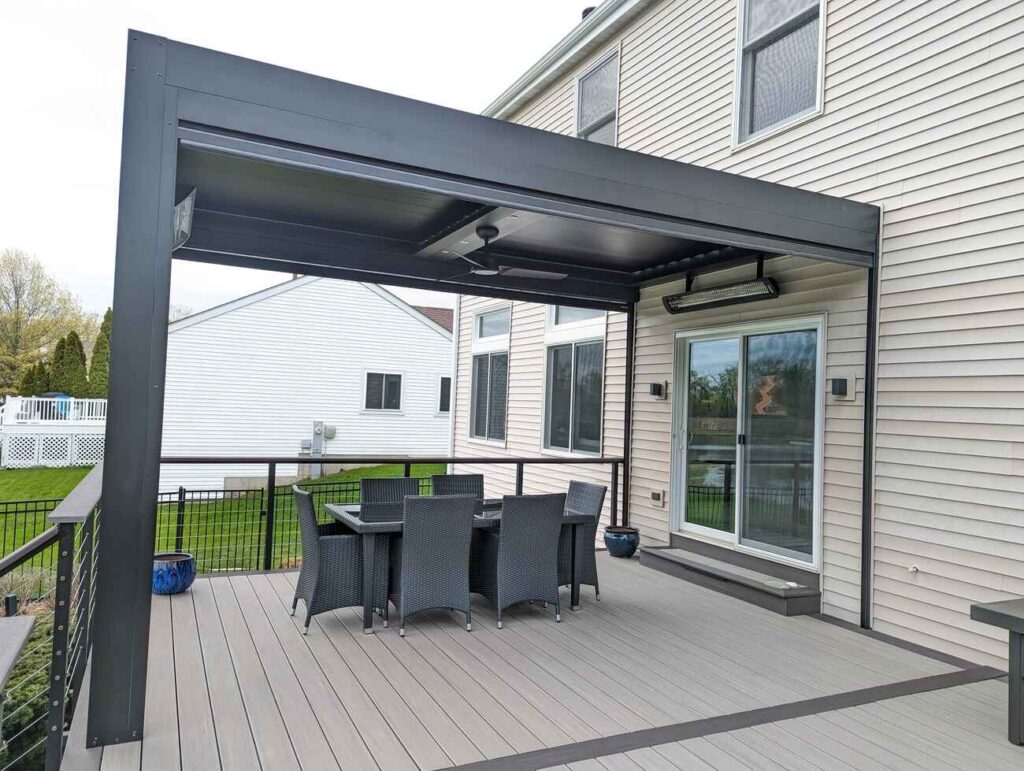
What we see on real decks is that color and sun exposure matter more than the material. A dark board facing full west in July is hot whichever line it comes from. A lighter color, or a deck that’s shaded in the late afternoon, stays comfortable. If bare feet on a south or west deck are a concern, that’s a color decision we make with you during design, and we’d rather show you the options in 3D on your own house than guess.
Do the boards move with temperature?
Both do, and TimberTech handles the board ends differently for each. For composite, its deck board spacing guide sets the end-to-end gap by the temperature on install day: 3/16 inch at 32°F and below, 1/8 inch from 33 to 74°F, and 1/32 inch at 75°F and above. For Advanced PVC, TimberTech says to butt the ends tight at any temperature, with no gap, and to keep the boards cool during installation and fasten them soon after cutting, which limits gapping later.
This is one of the reasons the fastening system matters. We hold field boards with CAMO EDGE hidden clips, which set a consistent 3/16-inch gap for drainage and movement, and we set picture-frame borders with Cortex screws capped by plugs cut from the deck board itself. Either material installed the way TimberTech requires stays flat and tight. When those rules get skipped, the board ends are usually where it shows.
Which costs more, and by how much?
TimberTech ranks PVC as the most expensive of its decking materials upfront, then composite. How much more depends on which collections you’re comparing, and the estimator prices the board you pick.
The board is one line in a deck budget. Most of our deck projects are $60,000 and up, and the spread comes mostly from size, height, access and railing, not from the decking line. Our composite deck cost guide walks through what does move the number, and the deck estimator gives you a range for your own size and options in a couple of minutes.
What we’d tell you on a call: if the deck sits over a patio you want to keep dry, by a pool, or high off the ground, price the PVC option before you rule it out.
What’s the best composite decking?
There isn’t one best board. It depends on the house, how much sun the deck gets and how long it stays wet. Within TimberTech’s line, here’s how the collections sort out on the decks we design.
- Legacy. Hand-scraped, four-sided cap, 30-year warranty. The most character in the composite range, in colors like Espresso, Tigerwood and Whitewash Cedar.
- Reserve. Wire-brushed, reclaimed-wood look, four-sided cap, 30 years. Driftwood and Antique Leather suit older brick and stone homes.
- Terrain. Quieter grain, four-sided cap, 30 years. The right call when the garden or the view should lead.
- Prime and Prime+. Three-sided cap, 25 years. A real step up from wood on a tighter budget, best on a dry, sunny deck.
- Harvest, Landmark and Vintage (PVC). Where moisture, height or a fire rating decides it. Vintage and Landmark are Class A.
Board width changes a deck’s proportion more than color does. TimberTech runs 3½, 5½ and 7¼ inch faces, and we pick against the scale of the house. More on how we spec the surface is on our composite decks page.
What doesn’t change between the two
Both materials follow TimberTech’s framing rules, which override the generic code table: joists at 16 inches on center for a straight lay, 12 inches for a diagonal one. Laying boards diagonally on framing set for straight boards is a common and serious error, and it shows up as bounce within a season.
Both need registering. TimberTech’s warranty only protects a deck that’s registered, and Fortress requires its framing warranty to be registered within 30 days of purchase. We register both at closeout so the coverage is in place from day one. How each warranty fits together is on our warranties page.
Both suit the space under a deck too. If you’re thinking about turning the patio below into a dry room, the surface choice matters less than the drainage system, which is covered on our under-deck waterproofing page. We build across DuPage, Kane and Will County, including Naperville, and every deck we design starts from the full decks picture rather than the board. For the other decisions that come with a new deck, see the rest of our guides.
Common questions
Is PVC decking better than composite?
It’s better where water sits: pool decks, elevated decks and shaded lots. TimberTech rates PVC’s water resistance higher and backs it with a lifetime product warranty. For a typical sunny deck, a four-sided capped composite performs well for its 30-year warranty at a lower upfront cost.
Which lasts longer, composite or PVC?
TimberTech gives PVC a life span of 50+ years and composite 25 to 30+ years. Both outlast wood. The frame underneath is often the real limit, which is why we build on steel.
Is PVC decking more expensive than composite?
Yes, upfront. TimberTech ranks PVC as its most expensive decking material. On a full deck project, size, height, access and railing usually move the total more than the decking line does.
Do composite and PVC need different framing?
No. TimberTech requires joists at 16 inches on center for both, tightening to 12 inches for a diagonal lay. We frame both on Fortress steel.
See both boards on
your own house
A free 30-minute discovery call: your deck, the material that fits it, and a real investment range. Design this winter, build in spring.
Book a Discovery CallAce of Decks · Aurora, IL · (630) 354-8887 · Serving DuPage, Kane & Will County