
Should you repair your deck,
or replace it?
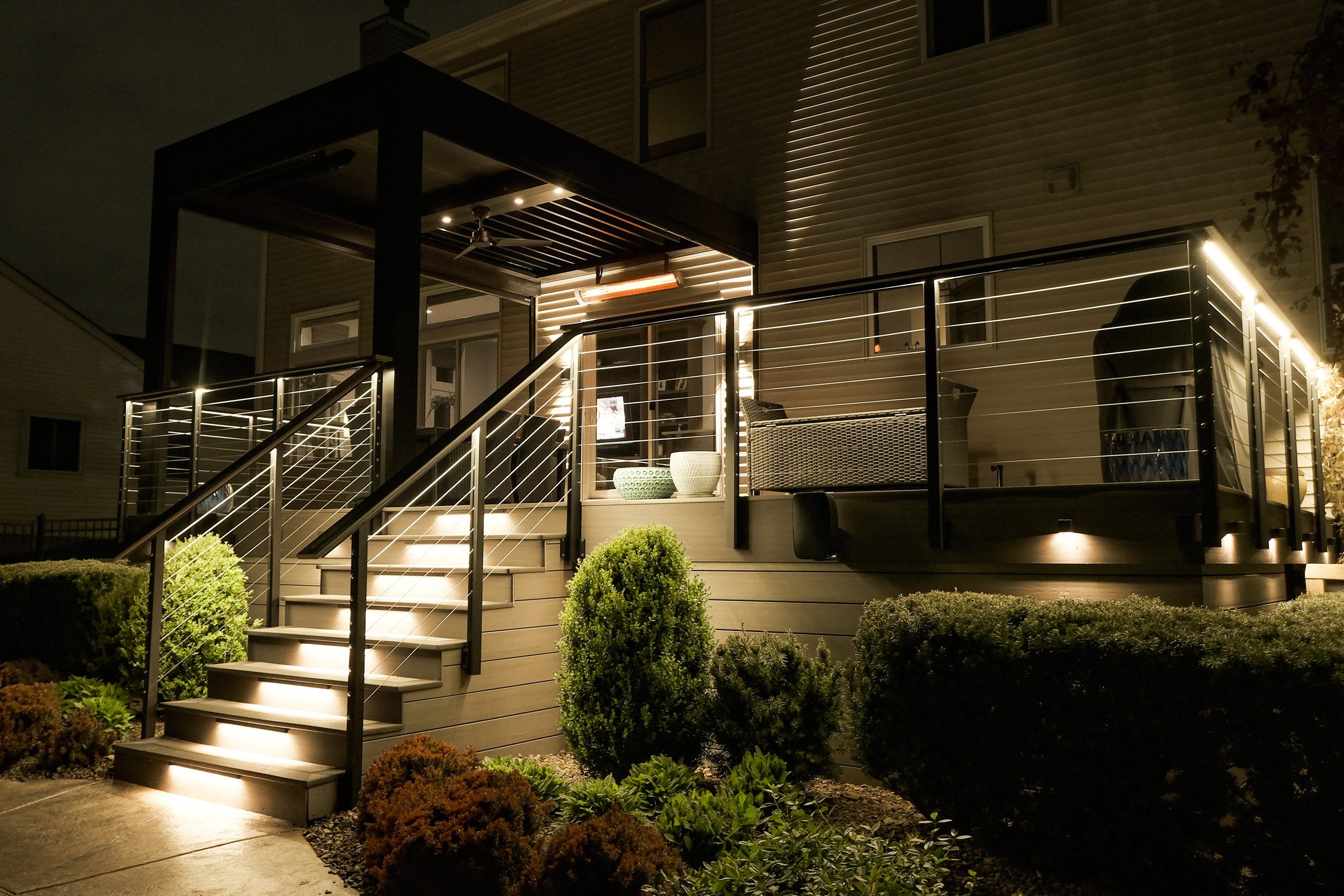
We don’t do deck repairs. We tear off old decks and build new ones. So here’s the straight version of how to tell which one your deck needs. If it’s boards and a railing on a sound frame, a repair carpenter is the right call. If it’s the frame, the footings or the ledger, a repair is money spent on something that’s already due.
The surface is the cheap part.
A deck is a floor on a structure. The boards and railing are what you see wearing out, so they’re what people ask to have repaired. The structure underneath is what decides whether the deck is safe and how long it has left. If the structure is due, new boards on it are a finish outliving its own frame.
That’s especially true of composite. A composite surface is rated for 25 to 50 years. Putting it on a 20-year-old wood frame is how people end up paying for a deck twice.
Eight things to check before you call anyone.
Most of these you can see from the yard with a flashlight. They’re drawn from the 2021 International Residential Code: the deck rules in section R507, guards in R312 and stairs in R311.7. If your deck fails any of the first four, it isn’t a repair.
| Check | What good looks like | If it fails |
|---|---|---|
| 1. The ledger | Bolted or lag-screwed into the house’s band joist, not the siding, and flashed (R507.9, R507.2.4) | Ledger on siding, or no flashing |
| 2. Footings | Concrete below the frost line, which is 42 inches here (R507.3) | Posts on surface blocks or shallow piers. The deck heaves every winter |
| 3. Posts and beams | Beams fastened to the posts with bolts or hardware, nothing soft when probed with a screwdriver (R507.5) | Beams just resting on posts, or wood that gives |
| 4. Lateral connection | Hardware tying the deck to the house against sideways load, or a freestanding design (R507.9.2) | Nothing resisting sideways load |
| 5. Guards | 36 inches minimum on any deck more than 30 inches above grade (R312.1) | Low or missing rails, or posts that move when you push them |
| 6. Baluster gaps | No opening a 4 inch sphere can pass through (R312.1.3) | Wider gaps |
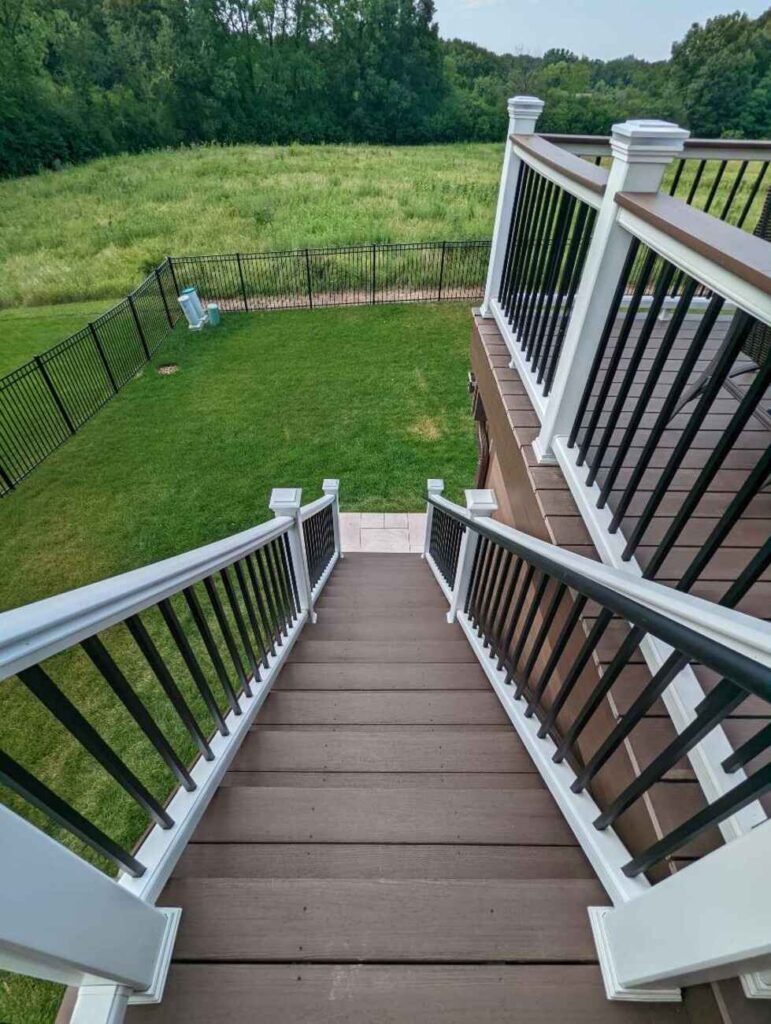
| 7. Stairs | Risers 7-3/4 inch maximum and within 3/8 inch of each other (R311.7.5.1) | Uneven risers, usually from hand-cut stringers |
| 8. Hardware | Hot-dip galvanized or stainless connectors on treated lumber (R507.2.3) | Rusted or plain zinc hardware |
This is a homeowner’s check, not an inspection. Anything on items 1 to 4 should be looked at by someone qualified before the deck is used again.
The rules changed after most decks were built.
A deck built in 2005 was built to whatever code its village had adopted then. The deck sections of the IRC have been added to and tightened in the editions since, including the ledger, lateral connection and footing rules in the list above, and villages here enforce the newer editions on any new or replacement deck.
That doesn’t make an old deck dangerous on its own. It means you can’t assume it meets today’s rules because it passed an inspection twenty years ago. On a replacement, we confirm the current requirements with your building department before we design it.
What replacing it involves.
- A permit, even on the same footprint. Most municipalities require one for a replacement deck. We pull it and handle the inspections.
- Footings to 42 inches. New, measured at inspection before concrete goes in.
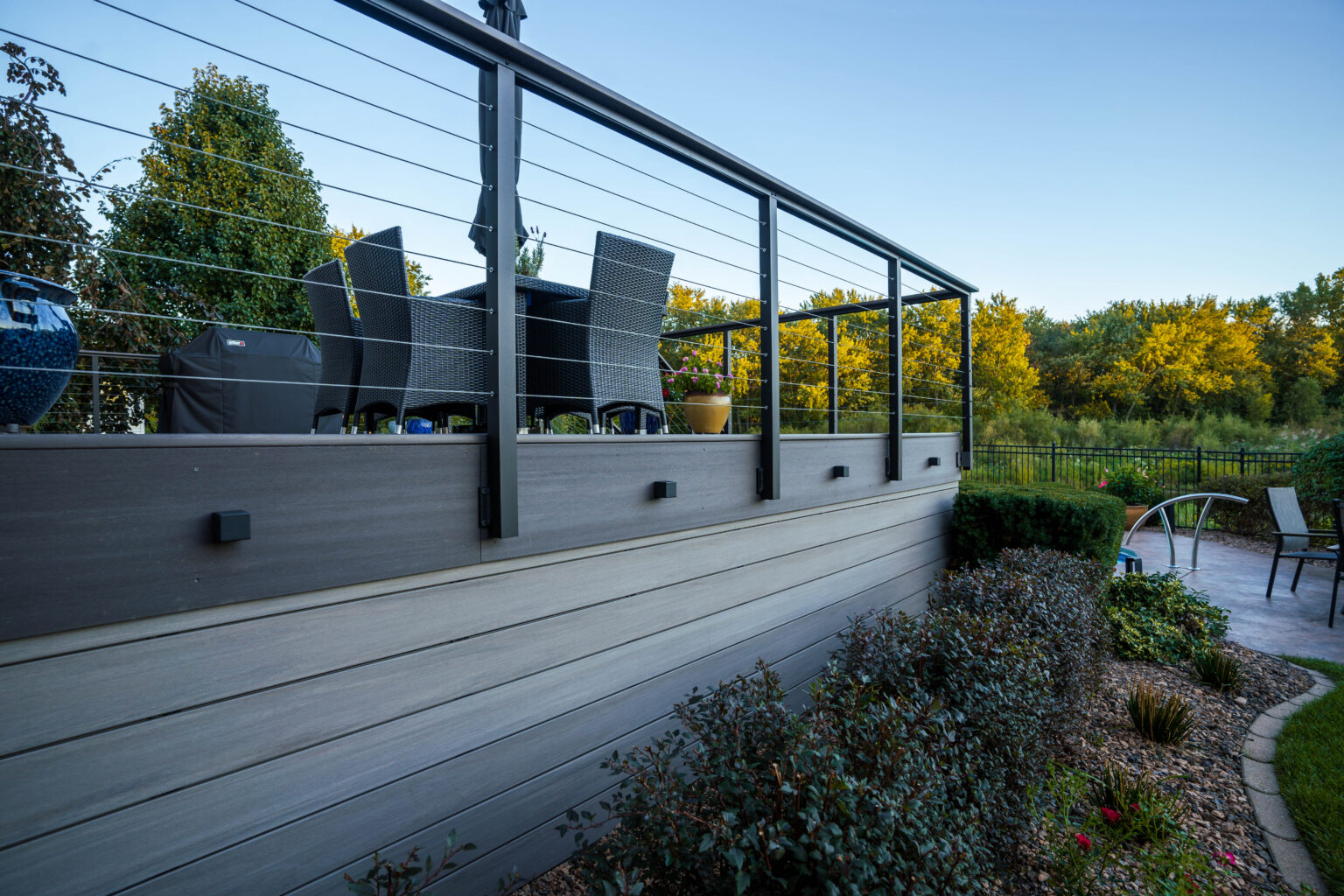
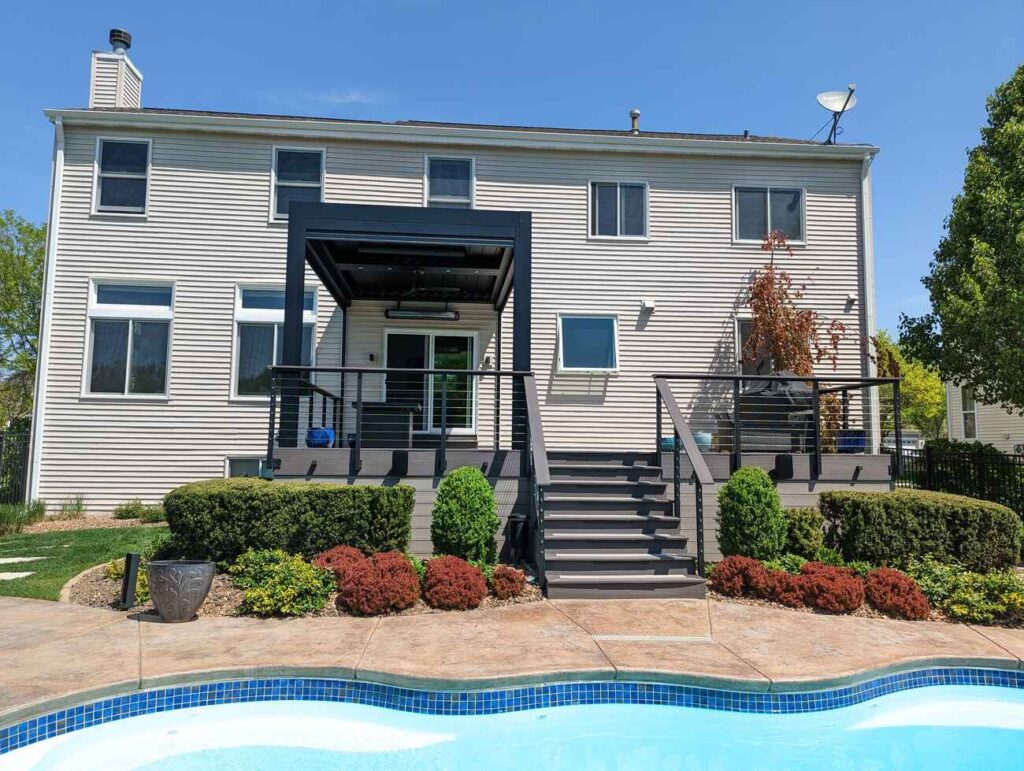
- A new frame. We build on Fortress Evolution steel, treated lumber or aluminum framing, and we’ll tell you which fits your deck. Steel won’t rot, warp or sag, so the frame lasts as long as the surface on it. Our steel vs. wood framing guide compares the two.
- A surface chosen for the house. TimberTech composite or PVC, picked against your architecture.
- The space underneath, while it’s open. An elevated deck is the moment to add under-deck waterproofing and turn the space below into a dry room.
Most of our deck projects are $60,000 and up.
A replacement is a new deck, so it’s priced like one, from a completed 3D design. Smaller decks we take on when the schedule allows. The deck estimator gives a range in about a minute, built the same way we estimate, and it asks whether there’s an old deck to tear off.
Finished replacements go here.
We’ll add replacement decks here as they’re completed, with a note on what the old deck needed.
What people ask us.
Do you repair decks?
No. We don’t do repairs, refinishing or resurfacing. We replace decks from the footings up. If your frame is sound and only the boards are worn, a repair carpenter is the better call.
Can new composite boards go on my old frame?
Only if the frame is sound, correctly spaced for composite, and has enough life left to carry a surface rated for decades. On an older wood frame, that’s rarely the case.
Do I need a permit to replace a deck?
Yes, in most municipalities, even on the same footprint. We handle it.
Is my deck safe to use?
If the ledger has no flashing or sits on siding, the posts sit on surface blocks, or wood is soft when probed, have it looked at before using it again.
If it’s due, start with the design.
A replacement starts with a free call, then a paid design phase: a full 3D design of the new deck, priced on screen. The design retainer is $3,000, with $1,500 applied toward your build. We’re booking design now for spring 2027 builds.
See the Design PhaseMore on decks: custom decks · composite decks · under-deck waterproofing · permit guide
Based in Aurora, serving the western suburbs.