What Do Motorized Retractable Screens Cost? A 2026 Options Guide
Motorized retractable screen systems for a home in the Chicago suburbs typically cost $15,000 to $60,000 in 2026, depending on how many openings you’re screening, their size, the fabric type, and the motor configuration. Systems designed into a new pergola or covered structure from day one run $75,000–$160,000 as integrated projects. Commercial restaurant enclosures are scoped per RFQ. Here’s what moves the number and which options exist.
What drives the cost of retractable screens?
Four variables. Number of openings. Each opening is its own tracked, motorized system, so an eight-opening wraparound is a different project than screening one porch face. Opening size. Width and height determine fabric span, track length, and motor sizing; oversized openings need heavier-duty systems. Fabric selection. Insect mesh, solar shading fabric and clear vinyl weather panels carry different costs, and dual-track systems that run two fabrics in one opening cost more than single-track. Controls. A single wall switch versus remotes, wind sensors and home-automation integration.
Site conditions matter too: recessing tracks into a new structure is cleaner and often cheaper than surface-retrofitting an old one.
What types of screens exist?
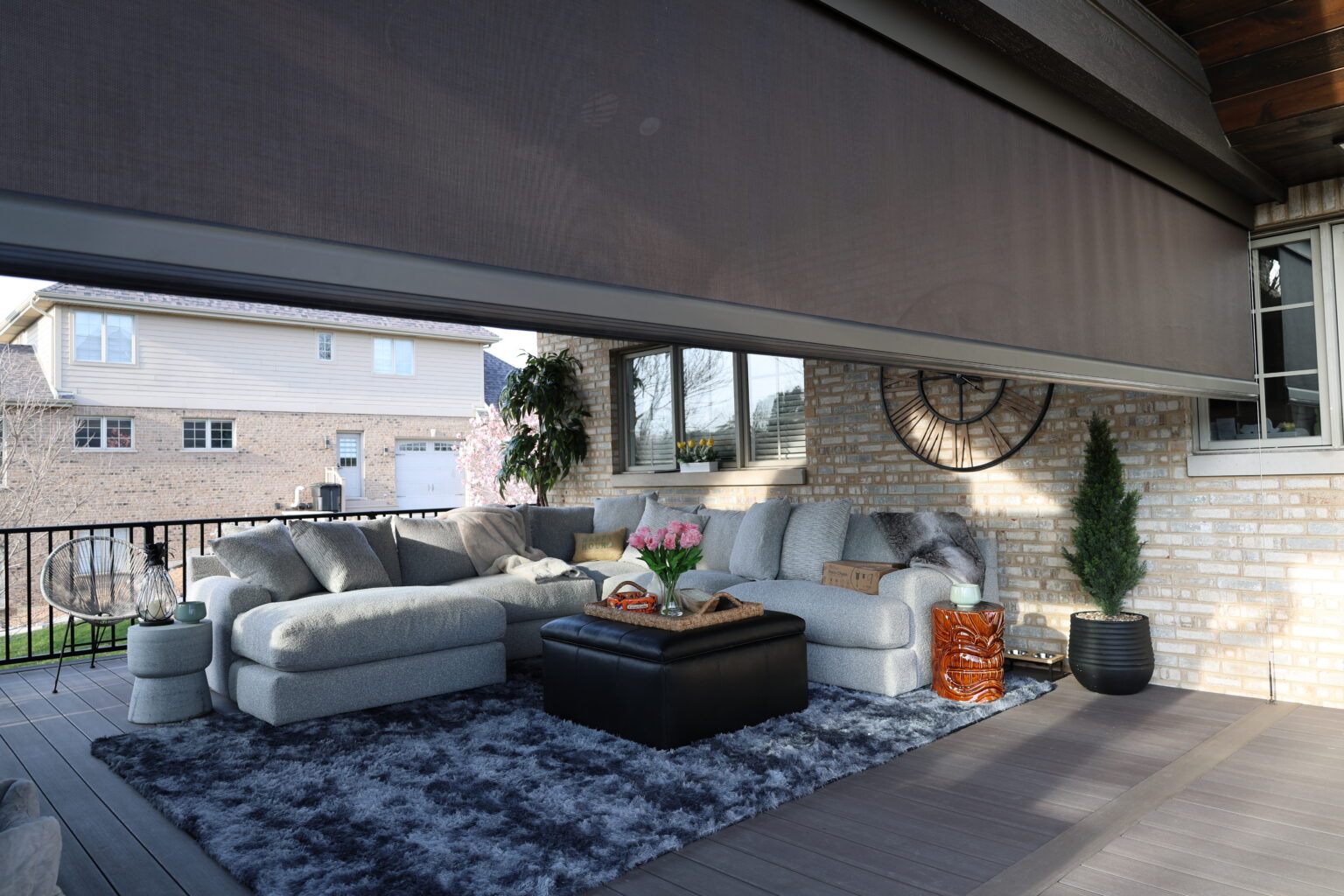
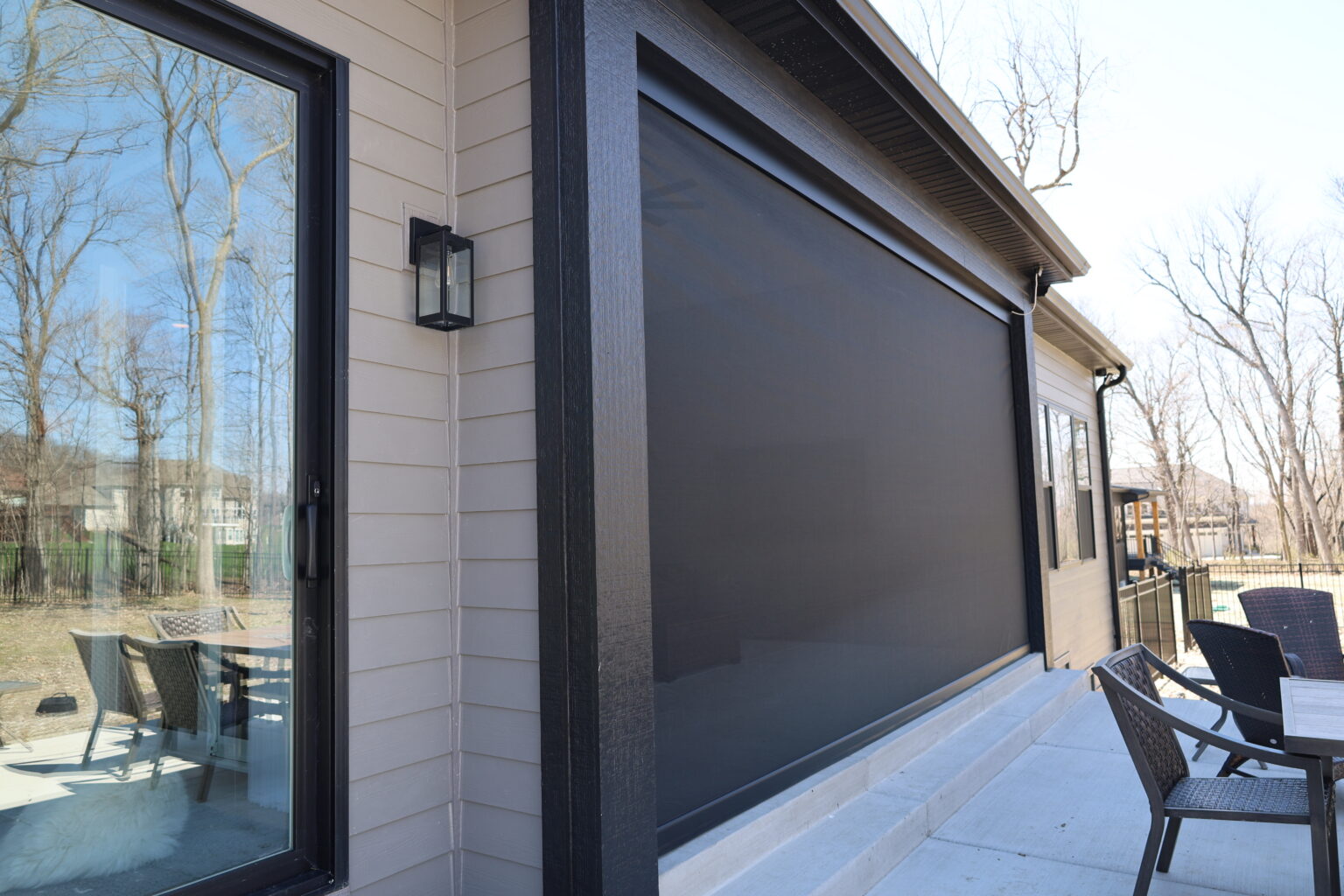
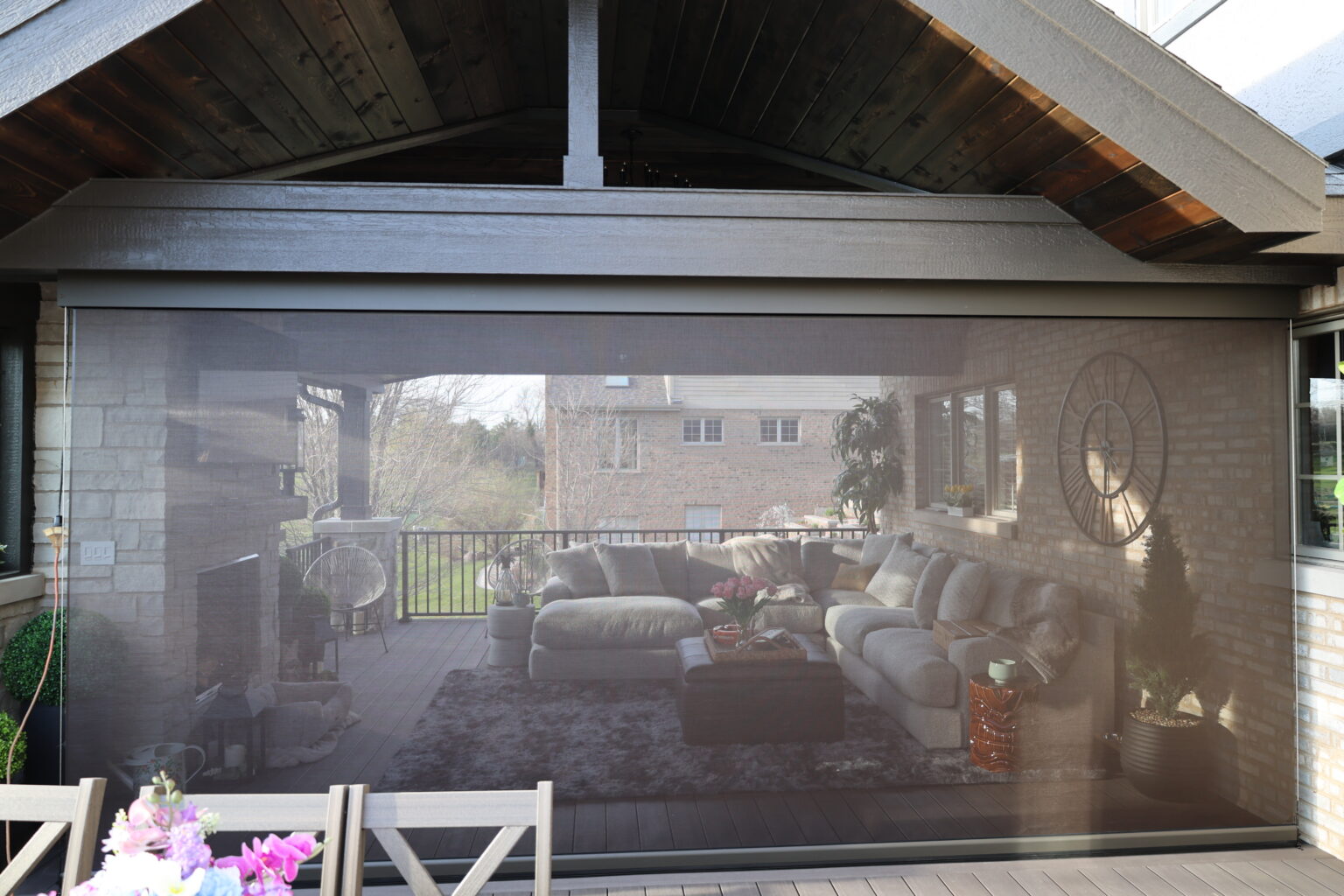
Insect mesh is the classic: full visibility, airflow, no mosquitoes; the workhorse on wooded and water-adjacent lots like Barrington’s. Solar fabric cuts heat and glare on west-facing exposures while keeping the view. Clear vinyl seals the space against wind, rain and shoulder-season cold.
It is the three-season-room maker. Dual-track systems run mesh and vinyl in the same opening: screen for July evenings, vinyl for October nights, nothing visible in June. We install Fenetex systems exclusively, and every option above is track-guided. The fabric locks into side rails so it holds under real wind instead of blowing out of its channels, which is the defining failure of lighter-duty brands.
Why motorized instead of manual?
At the sizes and wind ratings that make screens worth owning, motorized isn’t a luxury. It’s what keeps the system reliable and actually used. Large spans hand-cranked out of a housing get operated twice and then abandoned; a screen that deploys at a button press gets used daily. Every system we install is motorized, controlled by switch, remote, or automation.
Rule of thumb from real installs: the screen system a family uses every single day is the one that requires zero effort to deploy. Convenience isn’t the upsell. It’s the whole point.
Should screens be designed in or retrofitted?
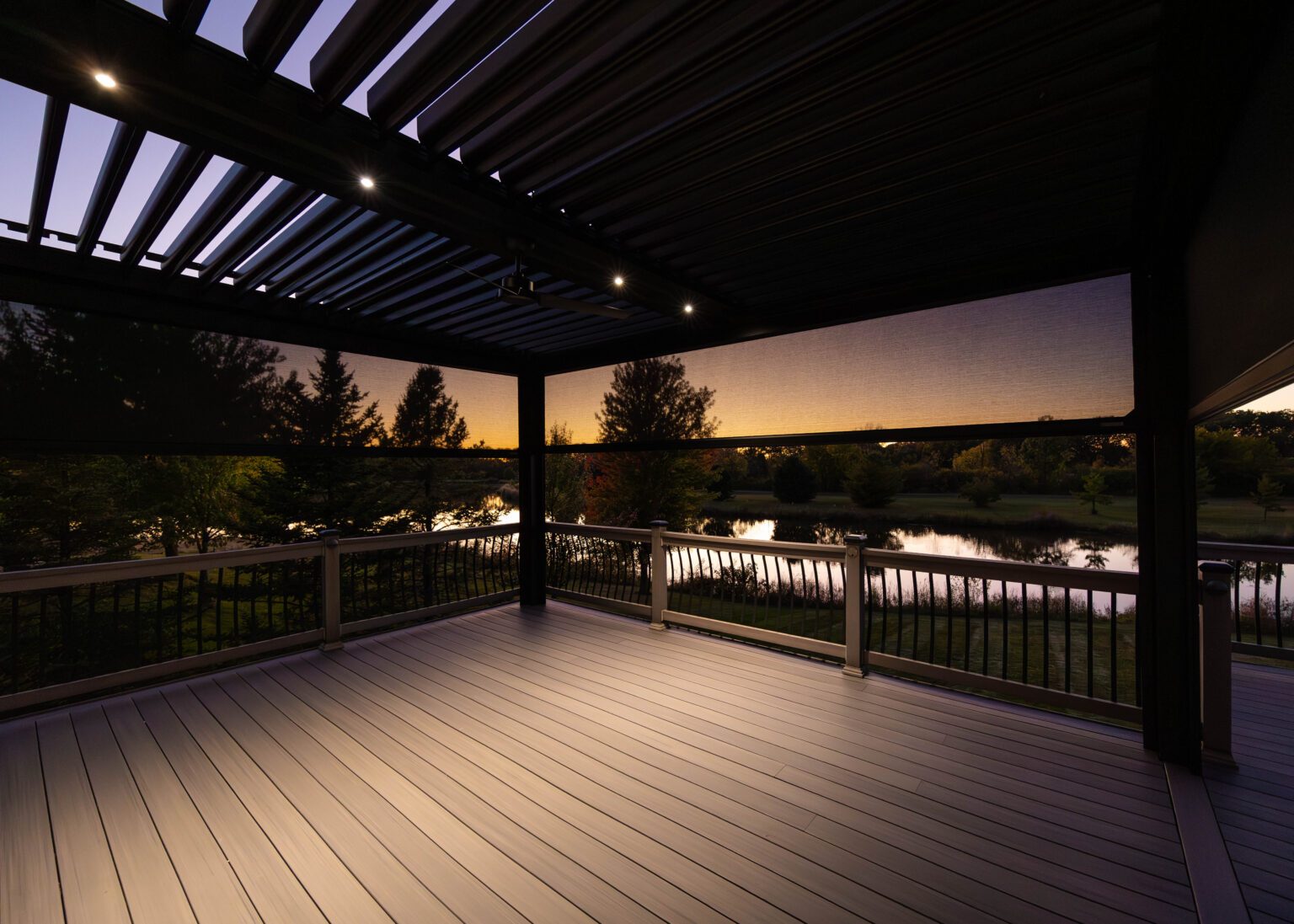
Existing covered porches and pergolas can usually accept surface-mounted tracks and housings. Retrofits are a large share of our screen work and they perform well. But designed-in wins on aesthetics and often on cost-per-result: recessed tracks, hidden housings, wiring roughed in during construction. If you’re planning a new ceiling structure, decide on screens before it’s built, even if you install them a year later. The provisions cost little during construction and a lot after.
What about commercial patio enclosures?
Restaurant and hospitality enclosures are a different engineering class: NFPA 701 fire-rated fabrics, wind-rated systems engineered to 50 MPH, stamped Illinois structural calculations, and Somfy commercial motor systems. Outdoor seating is revenue, and an engineered enclosure is what makes it year-round revenue. We work directly with owners and GCs and respond to formal RFQs. Full specification details are on the screens and enclosures page, and the conversation starts through our contact page (mention it’s commercial and it routes accordingly).
Get the real number
for your property
A free 15-minute discovery call: your project, a real investment range, and whether we’d be a good fit. No pressure.
Book a Discovery CallAce of Decks · Aurora, IL · (630) 354-8887 · Serving DuPage, Kane & Will County