Aurora, IL · DuPage · Kane · Will County
TimberTech Exclusive Dealer
4.9★ 50+ Reviews

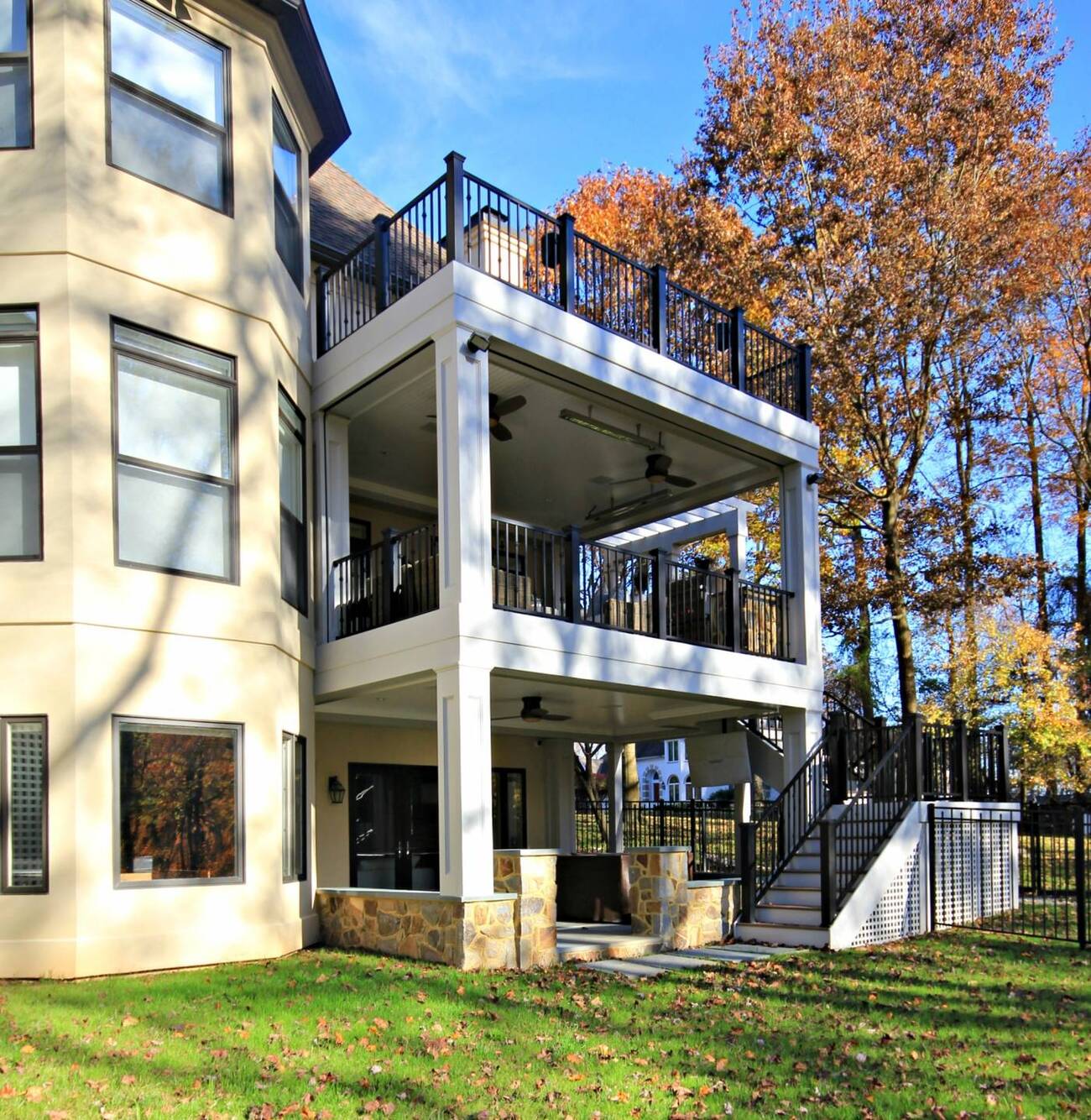
Second Story Decks
Custom second-story decks designed around structure, drainage, waterproofing, lower-level usability, and long-term performance — built for homeowners who want more than a basic raised platform.
Why It Matters
A raised deck is not just a deck surface. It impacts drainage, shade, structure, access, stairs, railings, lower-level living, and the way the backyard connects to the home.
When planned correctly, a second-story deck can create two outdoor spaces: an elevated deck above and a comfortable finished lounge, patio, or screened area below.
What Makes It Different
Height adds complexity. The best results come from planning structure, waterproofing, stairs, railings, drainage, lighting, and the lower-level experience together.
Posts, beams, footings, framing layout, spans, stairs, and lateral stability all matter more when the deck is elevated.
Waterproofing and underdeck drainage protect the lower space and make the area below the deck more usable.
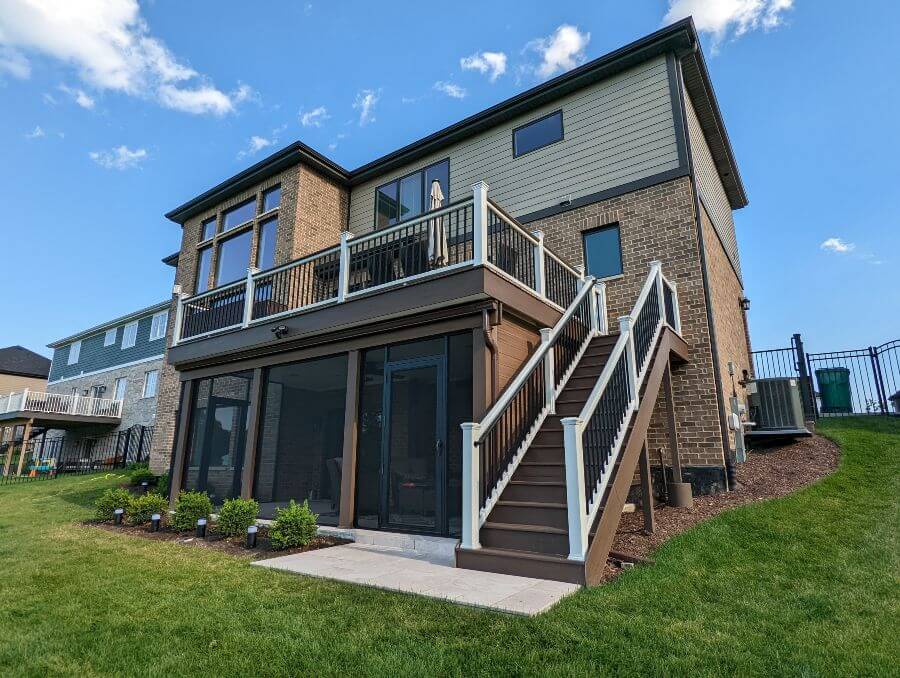
The space under the deck can become a finished patio, lounge, screened area, storage zone, or shaded outdoor room.
Stair placement impacts flow, yard access, furniture layout, privacy, and how the deck connects to the rest of the backyard.
Aluminum, cable, and modern railing systems improve safety while keeping the space open and architectural.
Integrated lighting, fans, heaters, ceilings, and screens can turn the lower level into a true outdoor living space.
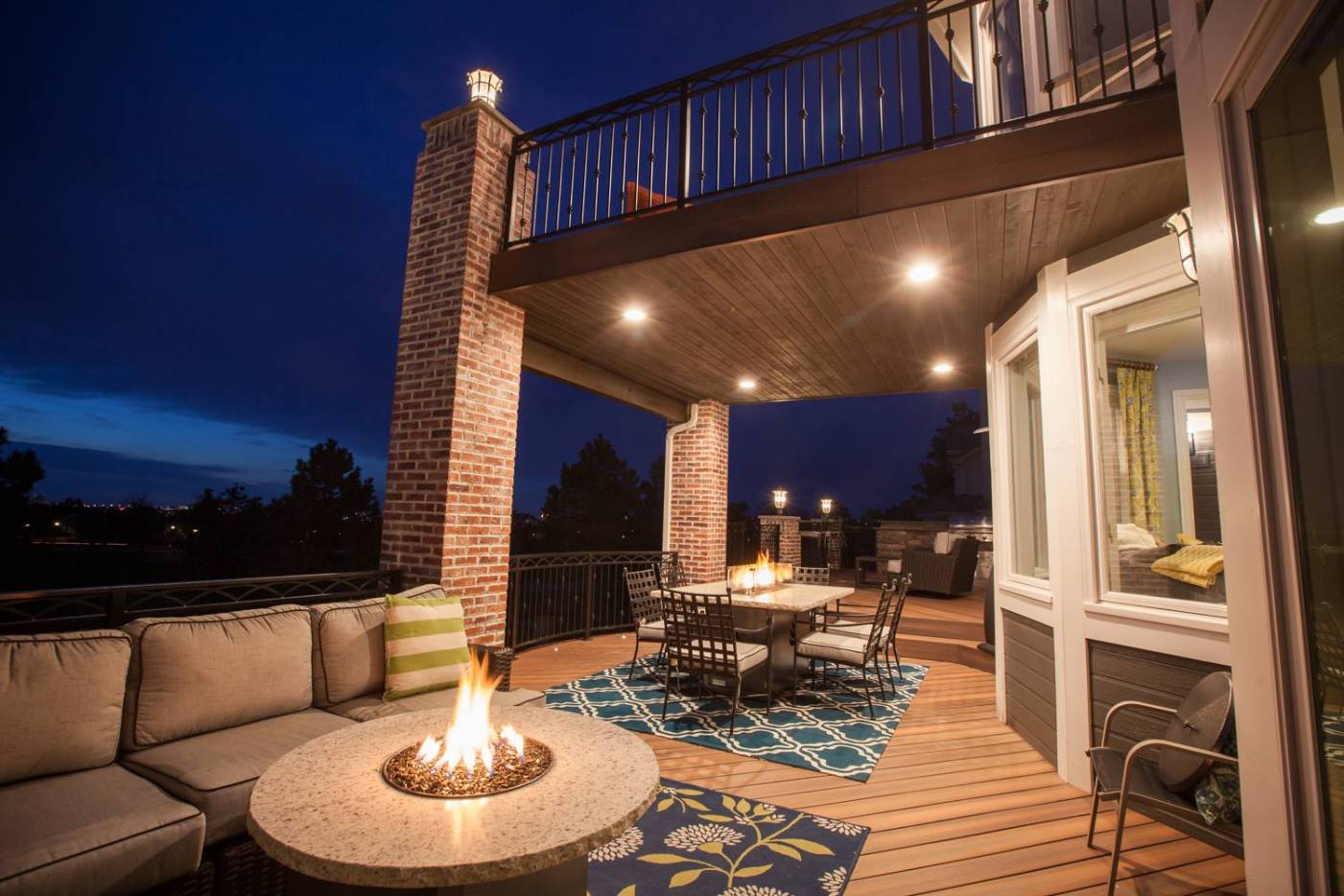
Structure Options
For homeowners who want a higher-performance structure, Fortress Evolution steel framing is a strong upgrade for elevated decks. It reduces movement, twisting, warping, and long-term framing issues compared to wood.
Wood framing is still an option, but second-story decks are one of the strongest use cases for upgrading the structure underneath.
Project Inspiration
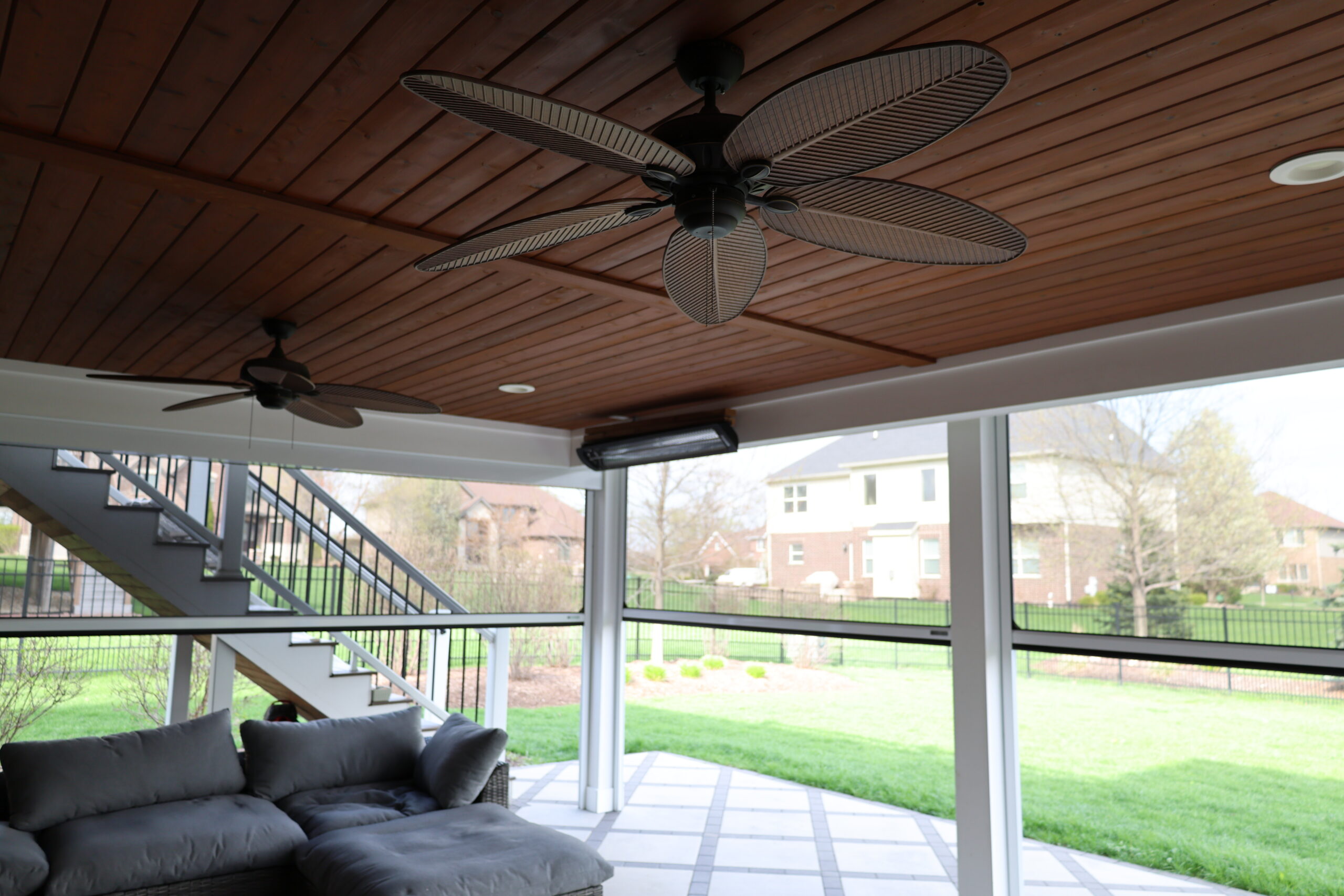
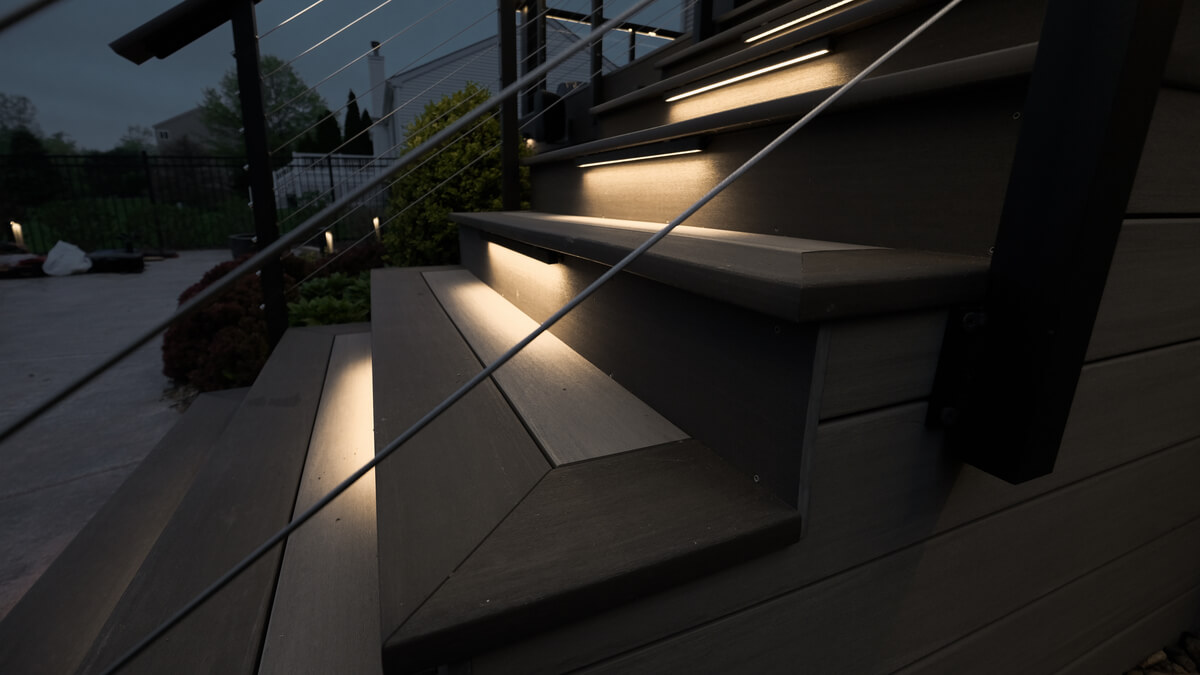
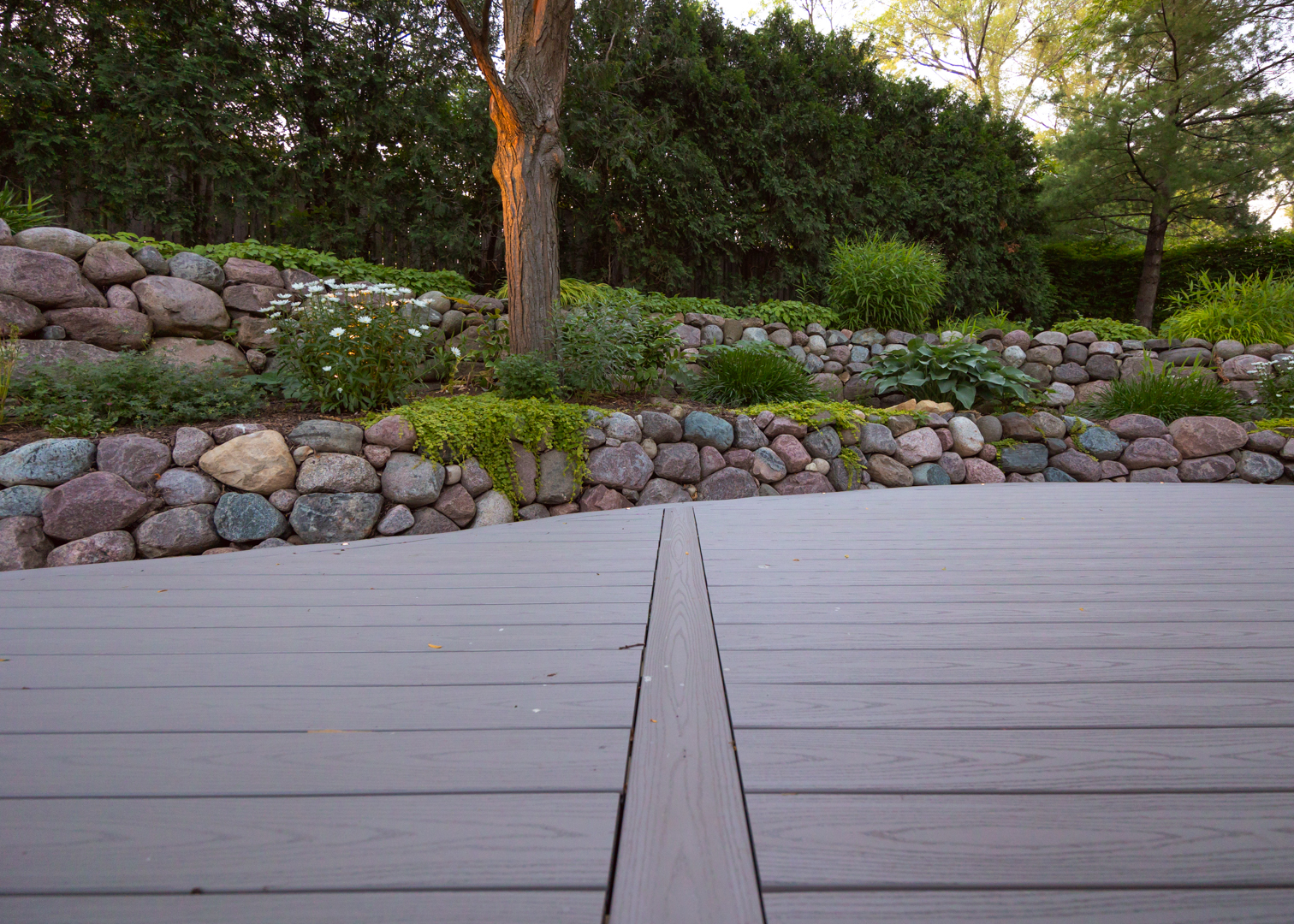
The upper level becomes an elevated deck. The lower level can become a shaded patio, lounge, screened room, or fully finished outdoor living space.



Second-Story Deck Options
These features help turn a raised deck into a complete outdoor living system instead of a basic elevated platform.
Underdeck drainage systems help keep the area below the deck drier and more usable year-round.
Ceiling systems, fans, lighting, and heaters can make the underside feel like a finished outdoor room.
Fenetex motorized screens can improve privacy, bug control, comfort, and seasonal usability below.
Upper or lower-level cooking areas can be integrated depending on the deck layout and access.
Step lights, post lights, under-rail lighting, and ceiling lighting improve safety and atmosphere.
A Techo-Bloc paver patio below the deck creates a second outdoor living zone with better flow and function.
Our Process
Second-story decks involve structure, permits, drainage, stairs, materials, and lower-level planning. The process needs to be organized before construction begins.
We discuss your goals, home layout, budget direction, and whether the project is a good fit. No cost.
We review the home, access, height, grade, stairs, structure, and lower-level opportunities in person.
We plan layout, materials, waterproofing, framing, railings, stairs, and optional lower-level finishes. $1,500 applied toward your build.
We execute the project with clear scope, communication, structural planning, and finish details.
Common Questions
Yes, with the right underdeck drainage or waterproofing system. The exact approach depends on the deck framing, drainage path, ceiling finish, and how finished you want the lower space to be.
It can be a strong upgrade. Elevated decks are more demanding structurally, and Fortress Evolution steel framing can help reduce movement, twisting, warping, and long-term framing concerns. It carries a 25-year warranty.
Often, yes. Fenetex motorized screens can help convert the lower-level area into a comfortable outdoor room. Mounting conditions, beam layout, ceiling height, and electrical access all need to be reviewed.
Yes. Most second-story decks require permitting and may require structural plans or engineering depending on the municipality. We pull and manage every permit — you don't touch a single form.
Yes. A Techo-Bloc paver patio under the deck is one of the best ways to create a second outdoor living zone. It should be planned with drainage, posts, stairs, access, and furniture layout in mind.
Start with a free discovery call. From there, our outdoor living specialist visits your property for an in-person consultation ($150). If you'd like to move forward, 3D Design & Planning is $3,000 — with $1,500 applied toward your build.
Explore More
The best elevated deck projects often include framing upgrades, waterproofing, patios, screens, lighting, and other outdoor living features.
Start the Conversation
Tell us about your home, current deck, height, lower-level goals, and what you want the finished outdoor space to become. We'll help you understand the best next step.
Ace of Decks designs and builds second-story decks, elevated composite decks, waterproof deck systems, finished underdeck spaces, steel-framed decks, patios under decks, Fenetex retractable screen enclosures, and complete outdoor living environments throughout Aurora, Naperville, Plainfield, St. Charles, Geneva, Wheaton, Downers Grove, Hinsdale, Oak Brook, Burr Ridge, Oswego, Yorkville, and the surrounding Chicago suburbs.